Tuesday, April 3, 2012

Busy Berlin

Lisa's friend Sten came to visit a few weeks ago. Since Lisa had to work every day, I was able to walk around the city with Sten and accompany him as he took photos. I took a few myself and thoroughly enjoyed our 3+ hour walks every day. Sten is great and it is easy to see why he and Lisa are such good friends.

One of the things I love about Berlin is it's state of perpetual motion. At times it is frustrating because of water line construction or the cranes, but since we don't have a car, we are far less frustrated by the constant activity.


A view from the Hauptbahnhof in Berlin, showing several train lines and construction:


Hauptbahnhof


Another view of the Hauptbahnhof


A beautiful cafe nestled right in the heart of the city, next to an ancient wall from 1250 AD, partially rebuilt.


One of the clearest exhibits of state controlled (communist) city planning can be viewed on Karl-Marx-Allee, formerly named Stalinalle. I was quite impressed with the grandeur of the buildings and symmetry.


A burned out church; the description was behind a locked gate


Sunday, March 4, 2012

Hamburg and Kiel

Lisa had a conference several weeks ago in Hamburg, in northern Germany. We thought it would be a great idea for me to accompany her and then head to Kiel afterwards to search for apartments. We packed snacks, a change of clothes, books, and took the train.

While she was busy Thursday and Friday morning, I took walks around Hamburg admiring the architecture, nature, and history. We also ate lunch together at a delicious Indian restaurant near the hotel.


Dammtor Station


While walking toward the bay, we saw this house where Mahler lived briefly. Happily, in a children's choir I sang Mahler's 8th with the Chicago Symphony Orchestra and the Chicago Symphony Choir so I could appreciate this history even more.


Beautiful views for runners or cyclists.


One of a few beautiful panoramas of sea and skyline in Hamburg.


Saturday and Sunday were spent searching for apartments in Kiel. Since our search was not fruitful, we will probably head to Kiel again in April and view more apartments then. Kiel is a University town, a shipbuilding center, and German Navy port. We hope they will accept these two landlubbers.

Thursday, February 2, 2012

Historical and Cultural Sites

One of the best purchases Lisa and I have made this last year, was a museum pass that allows us into 8 or 9 museums in Berlin. We have seen everything from ancient Greek sculpture to early church relics, Renaissance art and the Dutch masters.

We usually go for about 2 hours and then have coffee and cake or dinner after. I love Berlin.


Tuesday, November 8, 2011

Berlin Underground


Lisa was given gift-certificates to Berliner Unterwelten (Berlin Underground) from a colleague several months ago. In mid-October, we were able to finally take Tour 1, of a WWII bunker. Berliner Unterwelten e.V., a non-profit, offers 11 tours throughout Berlin and six of those in English. The tours range from WWII bunkers, Cold War bunkers, Flak towers, pneumatic delivery infrastructures, and subway lines, to subterranean escape routes from East Berlin into West Berlin.

For Tour 1, we headed to the U-Bahn Gesundbrunnen station. This station is the deepest U-Bahn station in Berlin and space was created in several floors above the station for civilian protection in WWII. Thousands of Germans used this station in WWII as Allied bombers bombed overhead. This neighborhood was a manufacturing area and therefore a prime Allied target. Since the tour guide said the bomb shelter structurally was useless against a bomb, it is a miracle that the civilians in this shelter weren't killed.

Evidently, the Nazis knew that this shelter was useless against an air raid, but some shelters were constructed around Berlin solely to prevent panic and to assure the public that a plan had been devised for their protection. We toured many rooms, separated by heavy steel doors, a large bathroom with composting toilets, ventilation equipment, bunk-beds, folding beds, safety equipment such as flashlights and gas masks, and fluorescent paint that pointed civilians in the right direction.

In several of these rooms were artifacts from the war- Nazi and Russian military helmets, gas masks, uniforms for the civilian protection corps, weapons, and posters for identifying enemy aircraft and discouraging loose talk.


In the last part of our tour, we viewed some of the remaining infrastructure for a pneumatic delivery system that was used in Berlin from 1865 to 1976 with 90 stations and 400 kilometers of tubing. They demonstrated how the pneumatic system worked and that documents could be sent anywhere in the city, signed and sent back in only two hours. Evidently, Chancellor of Germany still uses a pneumatic dispatch system for communiques throughout the Bundeskanzleramt.


Pictures were not allowed on this tour, so these have been borrowed from the internet. Lisa and I hope when friends and family come to Berlin that we shall view more of these tours.

For more information on these tours, visit: Berliner Unterwelten

Tuesday, October 18, 2011

Frohnhausen, Bonn Trip

About two weeks ago, Lisa and I had the opportunity to visit Lisa's family in western Germany. Lisa grew up, until the age of 8, in Frohnhausen, a village near Frankfurt, and still has relatives that live there. The opportunity to travel came from a conference Lisa attended in Frankfurt. Since Frankfurt is only about an hour away, we both decided to take the trip and for me to meet the family.

Lisa's maternal grandmother, Oma, who I've heard many stories about, as well as aunts and an uncle live near there. Lisa's Onkel Heinz and Tante Marlies provided a wonderful dinner of pork and sauerkraut in their basement.

Oma and Aunt Ulla


Marcel and I


Onkel Heinz and Tante Marlies' lake and cabin. Previously Lisa's grandma and grandpa's....Lisa has many memories of swimming here.


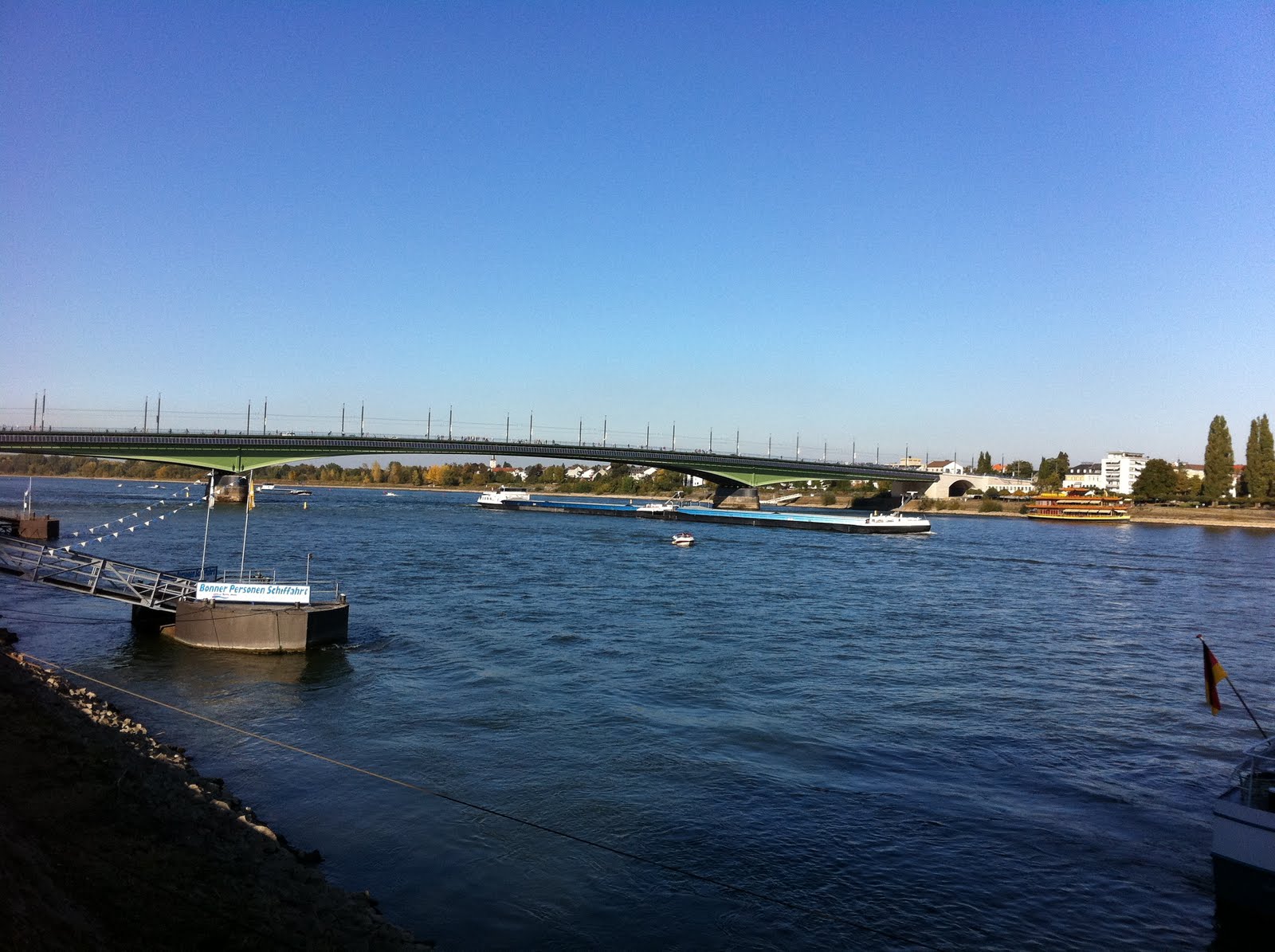
On the way back from Frohnhausen, we were invited to spend time in Bonn with Carolin, Lisa's cousin, and her husband Marcel. They were incredibly kind and gracious, taking us to this French restaurant Ratatouille in Bonn.


Lisa, looking her ever-gorgeous self


While in Bonn, we walked around the city and partially took in the Deutschlandfest. The Deutschlandfest celebrated the day of German unity, where West and East Germany were reunited.


It was a wonderful trip and I'm grateful for this connection to Lisa's childhood. I really liked the family and hope they liked me too. Unfortunately, we didn't plan the trip well and couldn't see Lisa's dad's side of the family in a nearby town to Frohnhausen. I hope to meet them in the next year.

Monday, September 12, 2011

Bonhoeffer- House

A few weeks ago, Lisa and I had the opportunity to visit the Bonhoeffer-House here in Berlin. This is actually Dietrich Bonhoeffer's parent's retirement house in Berlin, but Dietrich spent a good amount of time writing here and was arrested by the Gestapo here in 1943.

Bonhoeffer was part of the Confessing Church in Germany, which opposed Nazism in Germany and was in direct contrast to the national churches' allegiance to Hitler.


Both Lisa and I had known about Bonhoeffer and I had read his book Life Together, about community, while at Word Made Flesh. We were delighted that, upon making an appointment, we could view the house. We were able to spend 1.5 hours with a volunteer guide as he told us about the history of the house and about Bonhoeffer.


Much of the furniture in the house are reproductions due to renovations and lending the collections to other museums/memorial centers/libraries. However, the bookshelves, writing desk, and piano in his study are original. His manuscript After Ten Years was hidden in these rafters and was not found until after the war.


A historical timeline of the Bonhoeffer-House located in the front lobby:


We truly enjoyed paying respect to such a celebrated theologian, one who wrestled with nonviolence, but came to another conclusion in the midst of the evil of Hitler. We made a small donation at the end and also purchased a few pamphlets.

A nearby old train station, still in use, that Lisa and I imagined that Bonhoeffer would take frequently as he made his way to various Christian fellowships.


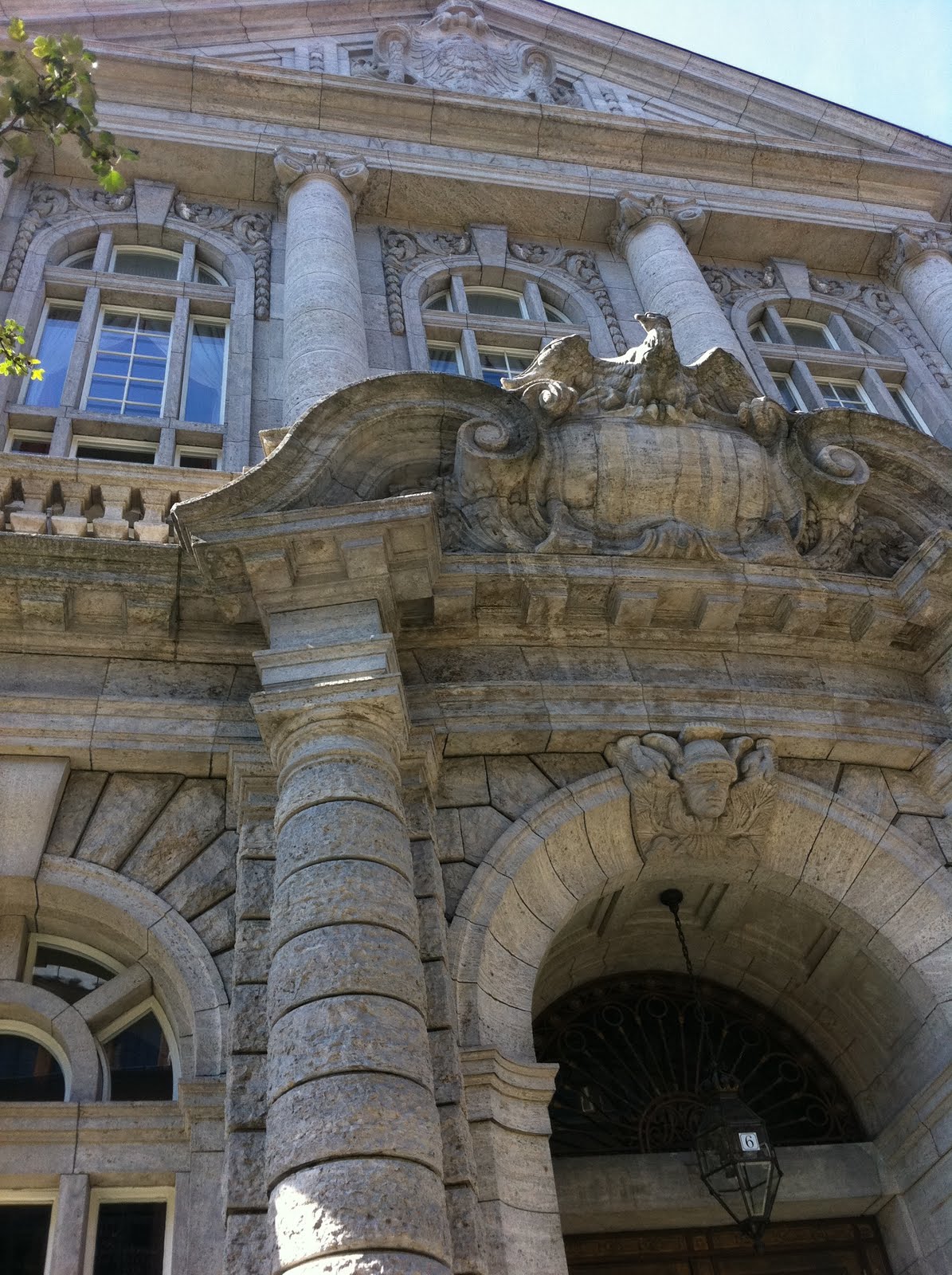
Also, Lisa and I happened upon a luxury condo building in west Germany that used to be The Imperial War Court. This is where Bonhoeffer was indicted and from where he was sent to prison. He was arrested and indicted because of a power struggle between the Abwehr (military intelligence) and the SS; his participation in the failed plot against Hitler was not found out until early April 1945.


A picture in the house shows the Flossenbürg concentration camp where Bonhoeffer was taken, tried, and executed in less than 24 hours. He was hanged less than 23 days before the Nazi's surrendered.


Lisa and I hope to visit more memorials for Dietrich Bonhoeffer and read more of his writing. For more information about Dietrich Bonhoeffer's life, here is the Wikipedia entry: http://en.wikipedia.org/wiki/Dietrich_Bonhoeffer