After the Great Recession, I noticed fear(s) on both a country-level and an individual level that were expressed similarly as questions of identity. I've found that during difficult times, there is a natural self-analysis; individuals and countries become introspective. They look back to when times were better, try to guess where the future is headed, and compare themselves with others around them.
Some of the questions asked:
1) Who am I? Who are we?
After a layoff and during a recession, there is a search for identity. Who am I and what do I bring to the table? In the absence of familiarity (I fulfill a need at my job for which I am paid), there is a subconscious search for: what do I provide that people value?
As an individual, this question is asked specifically: what are my strengths, what are my weaknesses, what are my opportunities?
As a country, I see the questions being asked: Who are we as a people? Are we going in the right direction? Many long for the past, and remember an idealized version of themselves. American Exceptionalism has been touted recently by conservatives; this ideology is an answer to an identity question. While American Exceptionalism doesn't necessarily tout superiority, my sense is that it's recent ideological re-emergence is designed to answer the angst-ridden questions: how am I different than other countries, what are my competitive advantages?
When sports teams lose, they search for their team identity. Countries become nostalgic and think about better times in the past. I've talked with people in former communist countries that longed for a return to communism because of full employment and people in former colonial countries that longed for a return to colonial (British, etc.) rule. Memories can often emphasize only the most positive attributes of the past and the other associative memories, long bread lines and an inability to vote, are forgotten. In the US, I've heard people long for days of old. These issues are mentioned as: the return of manufacturing jobs for high-school graduates, prayer in classrooms, and the workforce comprising one working parent and the other parent staying home with the children.
2) When was I doing well, what were the ingredients that made it a success? When was the US doing well?
As a country, we look back to the post WWII period, or parts of the 90's. Sectors that were doing well then (manufacturing, financial, housing) are not doing well now. So what is missing now?...is it that jobs were outsourced (common complaint), immigration took jobs (common complaint), taxes are too high to foster hiring (common but inaccurate complaint because taxes have gone down steadily since the 40's), technology is making jobs obsolete (most common source of jobs being lost, but Americans theoretically champion 'creative destruction' brought by technological innovation), entrepreneurship isn't being championed, or different environmental standards that allow foreign companies to produce at a lower cost (common complaint).
Besides looking nostalgically at the past, there is a personal inventory that takes place to examine if the ingredients are right for current success. Do I need retraining, do I need to enter a different career field, will I be perceived as being 'hungry' enough for the job to compete with 20 year old's?
3) Where can I cut costs?
Many families that did not experience job losses, still cut costs because of job loss uncertainty. Economists want people to re-balance their debt to income ratios, to spend less and save more, but don't want too many people doing that at the same time. On a macroeconomic level, if everyone starts saving more, then the economy, which is 70% based on US household consumption, will experience a significant drag. Remember after 9/11 that Bush and Giuliani implored people to go out and shop.
State governments, some of which are toying with bankruptcy, are cutting budgets drastically. The federal government can print money so it has not made the hard choices yet.
4) How many people am I competing with?
One of the most coldly calculating questions that people ask is: How many people am I competing with. Large, well-respected corporations often publish that thousands of applications are received for every job posting.
In cities where manufacturing jobs have left, there are even more applications per vacancy. Think Flint, Detroit or Battle Creek, MI. People become discouraged and move from places like Michigan to places like Florida because the odds are just too difficult when competing with hundreds of other people for each job. Workers along the Mexico border worry that the dry-walling, roofing, or contractors they've done in the past may be bid by other entrants into the marketplace.
5) Will someone underbid me?
Business owners I know, even in relatively good markets, think about if someone will underbid them on a job. They do not engage in collusion, but when they hear the bids that are accepted on jobs, they know that the winning firm will not only not make any profit, but may accept a loss in exchange for future business or to keep employees employed.
Both individuals and country's are asking themselves if they can compete against the lower costs/prices of competitors no matter how productive they are. A US worker asks if they can compete with someone from India (is the American __ times as productive to offset what an Indian worker may be paid?); the US asks if it can compete against the lower prices of the yuan/RMB of China. Countries, including the US, are now competing on how much to devalue their currency to encourage export growth. Countries like Vietnam just devalued their currency, to provide a competitive advantage for exports.
Our economy has become so commoditized that businesses and consumers often have this conversation:
Consumer: What is the cost of this?
Business: We're not selling a product; we're selling a service. We provide "this" level of customer service, "this" level of quality.
Consumer: I get that line from every business. They can't compete on price so they demonstrate their value-added services. What is the cost?
6) Where will the jobs be in 40 years?
No one knows. Some economists believe that only high-knowledge, high-skill jobs will survive. Other economists believe these jobs are precisely the jobs that will be usurped by robots/computers/technology. Most industries do more with less than 50 years ago. Fewer employees are needed to accomplish the same jobs. Will this lead to chronic unemployment in the future?
Thursday, February 24, 2011


Monday, January 31, 2011
Berlin December 2010
I have such great memories of being in Berlin in early December. It was a quick trip, financed by frequent flier miles; I had just enough time to propose. Lisa said "of course!".


Our romantic dinner the night of the proposal.

Beautiful in every setting




Our romantic dinner the night of the proposal.

Beautiful in every setting
Monday, January 10, 2011
Give It A Rest Uwe!
When I was a junior in high school, we had a German exchange student. He was everything you'd think of in a stereotypical German guy- hefty, looks like he's 40 only he's 17, has a 5 o'clock shadow at noon, has graying wavy hair, and I feel like he was wearing lederhosen (but that might just be to show off that he was an exchange student). He came in on the first day of choir, sat down at the piano before the start of class and started playing and singing in this rich baritone voice. He sang operatically and the sound filled the choir room. Students felt as though they were being welcomed into class and ushered into this new choir history. They applauded for him after the bell rang.
Cut to one week later....Uwe (pronounced Uva to lame English speakers), continues to play and sing and serenade the class until one student, sensing the rising sentiment of disgust, yells out: "Give it a rest Uwe!!"
No more playing piano or singing after that. (except in choir and in the multiple solos the choir director gave him).
In honor of Uwe, I looked up hefty guy playing a piano on Google and found this:

I know Uwe would have been much more dignified.
Cut to one week later....Uwe (pronounced Uva to lame English speakers), continues to play and sing and serenade the class until one student, sensing the rising sentiment of disgust, yells out: "Give it a rest Uwe!!"
No more playing piano or singing after that. (except in choir and in the multiple solos the choir director gave him).
In honor of Uwe, I looked up hefty guy playing a piano on Google and found this:

I know Uwe would have been much more dignified.
Thursday, September 2, 2010
Hit N' Run Evangelism
I'm trying to decide what I think about Hit N' Run Evangelism.
This is the term I give to Christians witnessing, in a non-personal way, and for which the evangelizers are never seen.
Some examples (I've heard Christians talk about most of these things):
-Christian magazines left at laundromats
-Tracts left here and there and especially on tables at restaurants
-Suggestive movie covers turned around at Blockbuster
-Suggestive books in libraries/bookstores put in other places or dumped in trash cans at the store
-Jesus graffiti. "Jesus Loves You" on overpasses, etc. (This seemed to be more of a phenomenon growing up).
This is the term I give to Christians witnessing, in a non-personal way, and for which the evangelizers are never seen.
Some examples (I've heard Christians talk about most of these things):
-Christian magazines left at laundromats
-Tracts left here and there and especially on tables at restaurants
-Suggestive movie covers turned around at Blockbuster
-Suggestive books in libraries/bookstores put in other places or dumped in trash cans at the store
-Jesus graffiti. "Jesus Loves You" on overpasses, etc. (This seemed to be more of a phenomenon growing up).
Thursday, July 15, 2010
Vienna
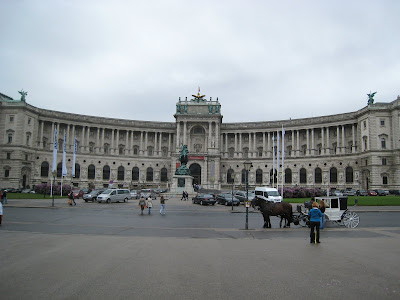
Lisa and I in Vienna. <3 I loved Vienna!!!! What a gorgeous city- both in terms of architecture and green space. The beer, schnitzel, architecture, public transportation, musical heritage and orchestral offerings, and coffee shops were lovely.
And Lisa was as lovely as ever....



And Lisa was as lovely as ever....


Family at Lutsen, MN

Bradley watching a movie

Sharon and her beautiful smile

Emma

Laura and Lilly

Myles, Nick, Josue, and Lilly
Apologies to other family members; photographer missing key skills.
Lutsen, MN Outdoors
The first three pictures show our hike up Moose Mountain. You start down towards a creek, then up and up. At the top of the mountain is a chalet and a beautiful view.


The last picture shows the condo where we stayed. I heard that Caribou Highlands, the resort 'village', tries to be really green- composting toilets, saltwater in their pools instead of chlorine. It was a great time in the outdoors and a great time with family.


The last picture shows the condo where we stayed. I heard that Caribou Highlands, the resort 'village', tries to be really green- composting toilets, saltwater in their pools instead of chlorine. It was a great time in the outdoors and a great time with family.

Subscribe to:
Posts (Atom)